






Report: industry must bolster social, emotional skills to attract under-represented groups
A report prepared by The Conference Board of Canada in conjunction with Future Skills Centre suggests that for construction to make itself more appealing to under-represented groups, the industry needs to bolster its social and emotional skills (SES).
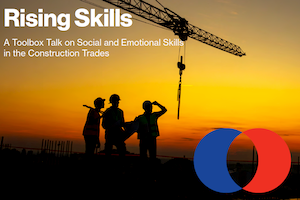 The report authors spoke to 250 stakeholders and apprentices from across the country in an effort to understand those emerging skills tradespeople will need to adapt to the future of work in the construction sector—particularly in the Red Seal trades.
It found that the industry is significantly lacking in SES—skills such as critical thinking and emotional intelligence that are essential for closing communication gaps among workers from different generations and varying backgrounds, and those needed to ensure the greatest attention to occupational health and safety.
It’s no secret that construction is facing a tremendous shortage of skilled workers. Figures released from BuildForce Canada last winter suggests that the industry will need to recruit more than 307,000 workers over the next ten years just to keep pace with demand. Demand in Ontario alone will require 100,000 new workers.
BuildForce has been clear in its message that, to meet this demand, the industry will have to recruit workers from traditionally underrepresented groups: women, Indigenous people and new Canadians.
Its 2019 data show that the industry employed about 191,700 women, of which 27 percent worked directly on construction projects. Of the 1.1 million tradespeople employed in the industry, women made up only 4.7 percent. Indigenous people accounted for little more than 4.9 percent of the total, of which about 81 percent work directly on construction projects.
Increasing the participation of both these groups would go a long way to help the industry address future labour force needs.
“The construction industry will need to concentrate on recruiting, training and retaining young workers, even as peak labour demand slows,” says BuildForce executive director Bill Ferreira. “Even if the labour market leverages full interprovincial mobility, the industry will still need to be diligent in recruiting, training, and retaining young workers, and expand recruiting efforts for new workers from local labour, other industries, and new immigrants to meet ongoing labour needs.”
The authors of the Conference Board report suggests that while the industry has done well to launch initiatives aimed at bringing women and Indigenous people into the skilled trades, it has given far less consideration to the social and emotional skills that the current generation of trades workers needs to participate on increasingly diverse construction worksites.
While many apprenticeship stakeholders interviewed for the report said they belonged to workplaces with zero-tolerance harassment and discrimination policies, a smaller number indicated they had access to training that promotes the skills needed to contribute to a respectful and inclusive workplace.
“Stakeholders used the phrase “old boys’ club” to describe the construction sector, noting that older tradespeople are experiencing the most difficulty exercising the skills needed to contribute to an inclusive workplace,” said the report.
Generational differences in communication are particularly problematic. Where older journeypersons may prefer in-person or voice communication and established work routines, younger apprentices preferred to communicate over text or email, and wanted more flexible workplaces.
“These mismatched preferences can impede knowledge transfer,” says the report. “In this context, tradespeople need stronger communication skills, such as the ability to share information with colleagues in a manner that is responsive to generational preferences. From a journeyperson’s perspective, active listening and patience are needed to communicate with the younger generation.”
The report also says that critical thinking, problem-solving and collaboration are increasingly important to advance occupational health and safety. This is particularly the case when communicating among various trades, when assessing and mitigating risks, to achieve safety objectives, and to respond appropriately to hazardous situations.
“Given the benefits linked to adopting safety practices, including a faster project schedule, a higher project return on investment, and a positive impact on the company’s reputation, it is important to attend to social and emotional skills in health and safety training,” says the report.
Finally, the report looks at the needs of Indigenous people wishing to develop skills and achieve certification in the construction trades. They include preferences for training in, and remaining in, their communities, reducing gaps between construction projects so work flows more evenly, and adapting training curricula to rural and remote audiences.
The report provides a series of suggestions to strengthen apprenticeship training and post-certification upskilling for tradespeople. These include expanding access to mentorship training within and beyond apprenticeships, addressing those barriers faced by Indigenous peoples in rural and remote regions, and incorporating social and emotional skills—such as problem-solving, critical thinking and collaboration—into health and safety training through in-person or virtual role-playing exercises.

Sponsored Ad
Contact Us
Link2Build
25 Sheldon Drive
Cambridge, ON
N1R 6R8
Phone: 1-800-265-7847
info@link2build.ca